Ampelaster carolinianus
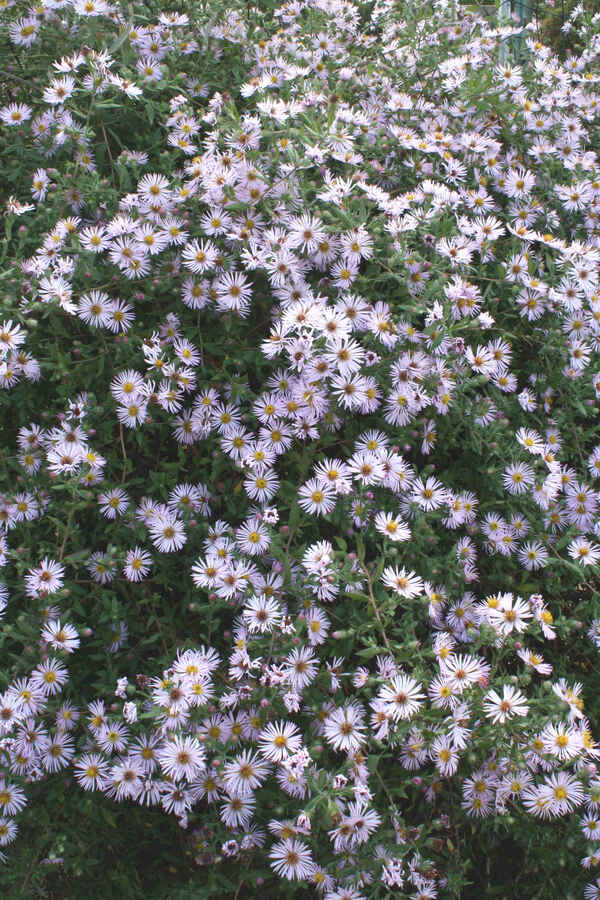
(aka: Aster carolinianus) What will they think of next...a native (NC south to Florida) woody aster that climbs! We figure the North American (NC south to Florida) native Ampelaster carolinianus watched too many old kudzu movies. Yes, it grows, it climbs, it mingles, it blooms...it closely resembles a clematis in habit with fragrant lavender-pink flowers from late September into November (NC). Give Ampelaster carolinianus a trellis, deer fence (which it really loves) or let it socialize in the garden...it's actually well-behaved! When in flower, our plant is abuzz with pollinators, including skippers, Monarch butterflies, honeybees, and native bees.
Maintenance:
Ampelaster (Aster) carolinianus is truly a maintenance-free perennial. Since it has a woody trunk, it never dies to the ground. If there was a reason, climbing aster could in fact be cut to the ground.
Growing Conditions:
Ampelaster (Aster) carolinianus thrives in a wide range of conditions, but seems to be best in full sun for 6+ hours, and in a well drained soil.Climbing aster is amazingly drought tolerant, but also thrives under irrigated garden conditions. Although Ampelaster (Aster) carolinianus can grow in part shade, flowering is reduced, and the chance of foliar diseases increases.
Natural Impact:
Ampelaster (Aster) carolinianus is pollinated by native bees and butterflies, while the seed are enjoyed by an array of song birds.
Nomenclature:
Climbing aster was known for years as Aster carolinianus, but DNA testing showed it, and other North American asters to be distant cousins instead of brothers and sisters. Consequently, in 1995, climbing aster was moved into a new genus, ampelaster, where it lives alone as the only member of the genus.
Original: $22.00
-70%$22.00
$6.60Product Information
Product Information
Shipping & Returns
Shipping & Returns
Description
(aka: Aster carolinianus) What will they think of next...a native (NC south to Florida) woody aster that climbs! We figure the North American (NC south to Florida) native Ampelaster carolinianus watched too many old kudzu movies. Yes, it grows, it climbs, it mingles, it blooms...it closely resembles a clematis in habit with fragrant lavender-pink flowers from late September into November (NC). Give Ampelaster carolinianus a trellis, deer fence (which it really loves) or let it socialize in the garden...it's actually well-behaved! When in flower, our plant is abuzz with pollinators, including skippers, Monarch butterflies, honeybees, and native bees.
Maintenance:
Ampelaster (Aster) carolinianus is truly a maintenance-free perennial. Since it has a woody trunk, it never dies to the ground. If there was a reason, climbing aster could in fact be cut to the ground.
Growing Conditions:
Ampelaster (Aster) carolinianus thrives in a wide range of conditions, but seems to be best in full sun for 6+ hours, and in a well drained soil.Climbing aster is amazingly drought tolerant, but also thrives under irrigated garden conditions. Although Ampelaster (Aster) carolinianus can grow in part shade, flowering is reduced, and the chance of foliar diseases increases.
Natural Impact:
Ampelaster (Aster) carolinianus is pollinated by native bees and butterflies, while the seed are enjoyed by an array of song birds.
Nomenclature:
Climbing aster was known for years as Aster carolinianus, but DNA testing showed it, and other North American asters to be distant cousins instead of brothers and sisters. Consequently, in 1995, climbing aster was moved into a new genus, ampelaster, where it lives alone as the only member of the genus.